
Atopic dermatitis
Chronic inflammatory skin disease with intense itch and evolution in outbreaks. Also known as atopic eczema. Very common in childhood but persists in many adults.
What is atopic dermatitis
Atopic dermatitis — also called atopic eczema — is a chronic inflammatory skin disease, evolving into outbreaks and intense itching. It is part of the so-called "atopic land", which also includes asthma and allergic rhinitis.
It is very common: it affects about 15-20% of children and persists or reappears in adulthood in a significant proportion. The intensity varies between mild cases with point outbreaks and severe cases with marked impact on sleep, concentration and quality of life.
Signs and symptoms
Itch is the central symptom — it is the one that bothers the most and that guides the itching behaviour, which aggravates the lesions. The most common manifestations are:
- Generalized dry skin (xerosis).
- Eczemas — red, peeling plates, sometimes with small gallbladders.
- Intense itch, often worse at night.
- Typical locations — bends (kilts, knees), face, neck, hands.
- Skin thickening in chronically scratched areas (lichenification).
- Painful fissures in flexion zones or fingers.
- Sleep disturbed in the most intense outbreaks.
How it presents itself at different stages of life
The typical location and appearance vary with age, although the central symptoms are the same:
- Infant (0-2 years) — face, scalp and extensor surfaces of the limbs; frequent exudative lesions.
- Child (2-12 years) — elbow bends, knees, wrists, ankles; drier and thicker lesions.
- Adolescent and adult — folds, face, neck and hands; predominance of thickening, very dry skin and chronic itching.
Causes
Atopic dermatitis results from the combination of several factors that weaken the skin barrier and alter the immune response:
- Genetic predisposition — mutations affecting skin barrier proteins (e.g. filagrine).
- Skin barrier dysfunction — the skin loses more water and is more permeable to irritants and allergens.
- Altered immune response, with exaggerated inflammation to usually harmless stimuli.
- Personal or family history of atopy (asthma, allergic rhinitis, food allergies).
Frequent triggers
Outbreaks can be triggered by factors that vary between people. Identifying your triggers is essential to reduce the frequency of crises:
- Dry air and cold temperatures.
- Excessive sweat and heat.
- Aggressive soaps and detergents.
- Clothes of wool or synthetic fabrics that sting.
- Environmental allergens (dust mites, animal hair, pollens).
- Emotional Stress.
- Skin infections — skin with atopic dermatitis is more easily infected.
Talk to a dermatologist about your atopic dermatitis
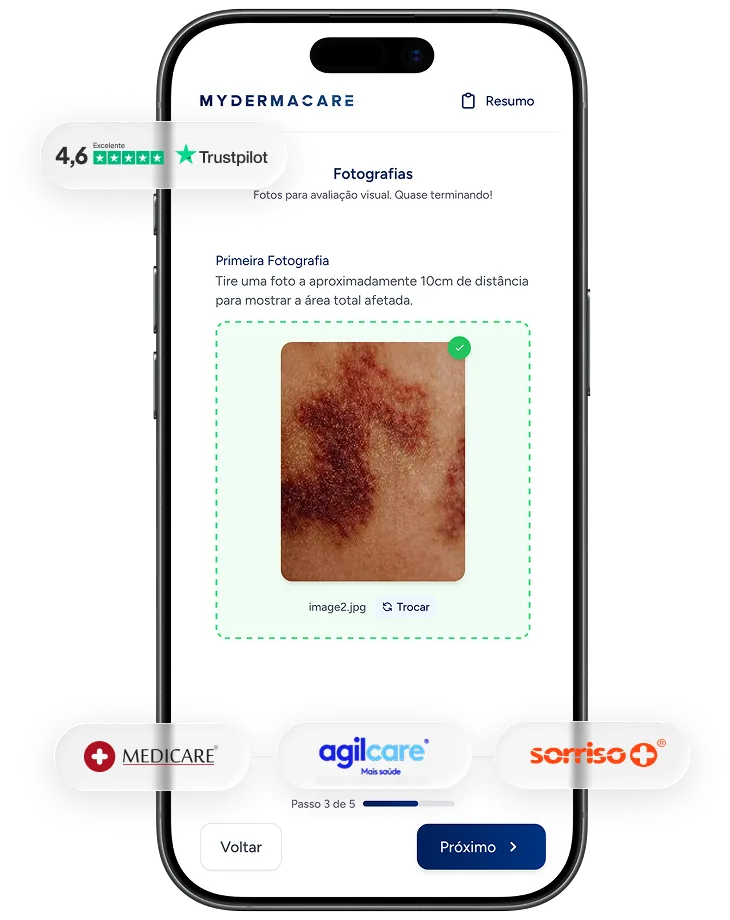
No months-long wait for an in-person appointment. Each case reaches the dermatologist already prepared with photographs, history and questionnaire answers. Choose a report in under 24h or a booked video consultation.
Start consultationDiagnosis
The diagnosis is clinical, made by the evaluation of injuries, distribution and personal and family history of atopy. No routine tests required.
In an online consultation, the dermatologist analyzes photographs of the affected areas and a questionnaire on the evolution, triggers and treatments already used. With this information it evaluates gravity and defines a custom plan.
In cases with strong suspicion of allergy to specific allergens, a complementary allergological investigation may be recommended.
Options for treatment
Treatment of atopic dermatitis has two axes: basic care (every day) and control of outbreaks (when they appear).
Basic care
Generous daily hydration with suitable emollients, short baths with soft products and avoidance of identified irritants. It is the foundation of the whole plan — without these care, active treatments have limited results.
Topical treatment OF outbreaks
Formulations applied directly to inflammatory lesions to control the outbreak. The choice, duration and application schedule are defined case by case by dermatologist.
systemic treatment
Reserved for moderate to severe conditions that do not respond to previous treatments. It is evaluated individually by the dermatologist, with regular medical follow-up.
Daily Care Making a Difference
Much of the control depends on simple habits, applied consistently:
- Moisturize the skin generously every day, even out of outbreaks.
- Quick baths (5-10 min), with warm water, not hot.
- Replace traditional soap with soft product without soap.
- Dry the skin with towel in soft touches without rubbing.
- Apply the emollient in the first minutes after the bath.
- Avoid clothes that pinch or pinch; prefer cotton.
- Keep your nails short to reduce scratch injuries.
Frequently asked questions
Is atopic dermatitis curable?
There is no cure, but in many children it improves significantly or disappears with age. In adults, it controls very well with a personalized plan — daily hydration, trigger avoidance and treatment of outbreaks.
Is it contagious?
Nope. Atopic dermatitis is not transmitted from person to person. It is an inflammatory disease of the skin based on genetic and immune, not an infection.
Is it related to food allergies?
In some small children with moderate to severe atopic dermatitis there may be an association, especially cow's milk and egg. In adults, the relationship with food is much less frequent. Food restrictions should only be made with prior medical evaluation.
Is the online dermatology consultation for atopic dermatitis?
Yeah. The evaluation by photographs and clinical questionnaire allows the dermatologist to classify severity, define the treatment plan and follow the evolution throughout the outbreaks — for children and adults.
Is it safe for babies and children?
Yeah. Many cases evaluated by online consultation are paediatric. If the dermatologist considers it necessary to examine the child in person at a given time, indicate it in the report.
Control atopic dermatitis with a dermatologist
Clinical questionnaire, photographs and a dermatologist responds within the time frame of the chosen plan. Ideal for continued monitoring, children or adults.
- From 60€
- Report on average within 24 working hours
- Ongoing follow-up