
Urticaria
Skin reaction with elevated papules (urticariform papules) and intense itching, often fleeting. It can be acute or chronic and always benefits from assessment by a dermatologist.
What is hives
Urticaria is a skin reaction characterized by sudden appearance of high, reddish or skin colour papules, with intense itching. Individual injuries are typically fleeting — they last less than 24 hours at the same location — but may reappear elsewhere.
It is one of the most common dermatoses: about 1 in 5 people will have at least one episode of hives throughout their lives. In most cases it is acute and self-limited. A minority evolves to chronic form and benefits from dermatologist evaluation and follow-up.
Signs and symptoms
Signs of urticaria are quite characteristic:
- High papules on the skin, reddish or pale.
- Intense itch, sometimes with a burning sensation.
- Injuries that appear and disappear in minutes or hours.
- Migration — while some injuries disappear, others appear elsewhere.
- They can be small or confluence on large plates.
- In some cases, angioedema is associated — deeper swelling of the lips, eyelids, hands, feet.
Types of urticaria
The duration and pattern guide the approach:
- Acute urticaria — lasts less than 6 weeks. It is the most common form and usually solves without sequelae.
- Chronic urticaria — lasts 6 weeks or more. It can be spontaneous or induced by specific stimuli.
- Induced urticaria — triggered by cold, heat, pressure, exercise, sun, water or vibration.
- Urticaria with angioedema — associated with deeper swelling, with typical location on lips, eyelids and extremities.
Causes
It is not always possible to identify a clear cause. The most common factors are:
- Viral infections (the most common cause of acute urticaria, especially in children).
- Allergies to food, medicines or insect bites.
- Reactions to some medicines ( always to be discussed with the doctor).
- Physical stimulation — cold, heat, pressure, exercise, sun.
- Emotional stress, which can trigger or aggravate outbreaks.
- Associated autoimmune disorders — especially in spontaneous chronic urticaria.
- In many chronic cases, a clear cause is not identified (spontaneous chronic urticaria).
Diagnosis
The diagnosis is clinical — based on the appearance of the lesions and their characteristic evolution. No tests are required in isolated acute episodes.
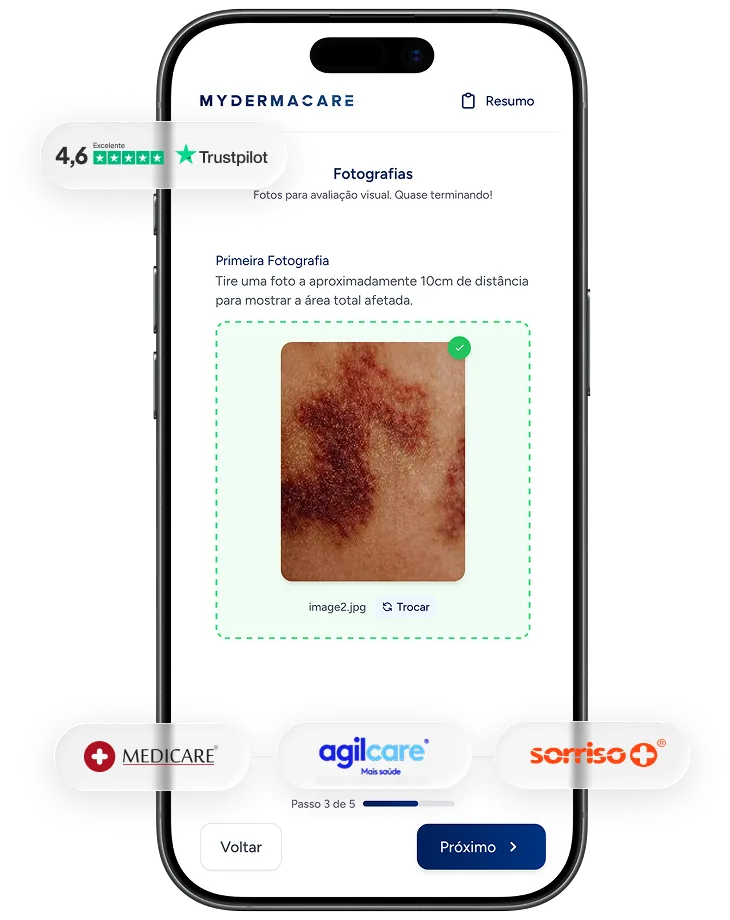
In an online consultation, the dermatologist evaluates photographs of the lesions (which helps a lot, given the fleeting nature of the papules) and a questionnaire about pattern, possible triggers, ongoing medication and associated symptoms.
In chronic cases, the dermatologist may recommend additional research — analyses, specific tests or evaluation by other specialties — to seek underlying causes.
Talk to a dermatologist about your hives
No months-long wait for an in-person appointment. Each case reaches the dermatologist already prepared with photographs, history and questionnaire answers. Choose a report in under 24h or a booked video consultation.
Start consultationOptions for treatment
The treatment has two axes: identify and avoid triggers (when possible) and control symptoms.
Trigger avoidance
If a specific stimulus is identified (medicine, food, physical factor), avoiding it is the most important measure. In spontaneous chronic cases without identified trigger, this approach does not apply.
Symptomatic Treatment.
There are effective treatment options to control papules and itching. The choice, dose and duration are defined case by case by dermatologist, with adjustments along the plane according to the response.
Follow-up in chronic form
Chronic urticaria benefits from a continued follow-up plan with periodic reviews, treatment adjustment and investigation of underlying causes when indicated.
Alarm signs — when seeking urgency
Most hives are not an emergency. But there are situations where you should seek immediate medical evaluation:
- Difficulty in breathing or wheezing (hoarseness, feeling of "close throat").
- Swelling of the tongue, throat or face that hinders speech or swallowing.
- Feeling dizzy, pale or unconscious.
- Reaction after ingestion of medicine, food or insect bite with systemic symptoms.
In these situations — which may indicate anaphylactic reaction — seek emergency hospital care immediately. Online consultation does not replace urgency in these cases.
Frequently asked questions
Is hives always allergic?
Nope. Many cases, especially in children, result from viral infections. In chronic forms, the most common cause is so-called spontaneous chronic urticaria — no identified trigger, with immune involvement.
Is it contagious?
Nope. The hives themselves are not transmitted from person to person. If associated with an infection, the underlying infection may be contagious, but skin lesions do not.
How long does a crisis last?
An acute episode typically lasts from hours to a few days. If it persists for more than 6 weeks, it will be considered chronic and benefit from specialised evaluation. Each individual injury lasts less than 24 hours at the same location.
Is the online consultation for hives?
Yeah. It is particularly useful in chronic urticaria for continued follow-up and treatment adjustments without waiting months for face-to-face consultation. In acute episodes without warning signs, it is also an effective alternative.
Should I avoid some food?
Only if a specific food is identified as a trigger — which is less frequent than you think. Empirical dietary restrictions rarely resolve and can affect nutrition, especially in children. See before restricting.
Evaluate your hives with a dermatologist
Clinical questionnaire, photographs of the lesions and a dermatologist responds within the time frame of the chosen plan — especially useful in chronic urticaria for continued follow-up.
- From 60€
- Report on average within 24 working hours
- Ongoing follow-up